Green Valley: Built in the Golden Age of Popcorn Ceilings
Green Valley officially opened in 1964 as one of Arizona's pioneering retirement communities — construction started in 1963, and the Maxon developers' first wave included over a thousand garden apartments and the townhome neighborhoods that still anchor the community's original core near La Cañada Drive and Esperanza Boulevard. After a rocky start in the late 60s, development found its footing, and the 1970s and 80s filled Green Valley with the single-story townhomes, patio homes, and modest ranch houses that define it today, spreading south along the I-19 corridor toward the Santa Rita Mountains.
That timeline matters for one simple reason: essentially all of Green Valley's original and mid-era housing was built when sprayed acoustic ceiling texture was the default. If you own a 1960s–80s Green Valley townhome, popcorn is almost certainly overhead — and because the whole era predates 1989, lab testing before removal isn't optional caution here, it's the standard first step on nearly every job.
Why Green Valley Owners Take the Popcorn Down
- Brighter rooms in compact floor plans. Many Green Valley townhomes are efficient 1,000–1,800 sq ft layouts where heavy ceiling texture visibly darkens rooms. Smooth or lightly textured white ceilings bounce Arizona light around and make the same square footage feel bigger.
- Resale turnover. Green Valley's age-restricted neighborhoods see steady resales, and buyers — often comparing several similar townhomes in the same HOA — consistently favor the updated interior. Popcorn removal plus paint is one of the highest-impact, most affordable pre-listing updates available.
- Estate preparation. Families readying a longtime family home for sale frequently handle popcorn removal while the house is empty — the single easiest time to do it, with no furniture to protect and no one living in the workspace.
- Health and housekeeping. Crumbling texture sheds flakes onto floors and furniture, and its craggy surface holds decades of desert dust that can't be cleaned without damaging it. Removal ends both problems permanently.
Working Respectfully in Retirement Communities
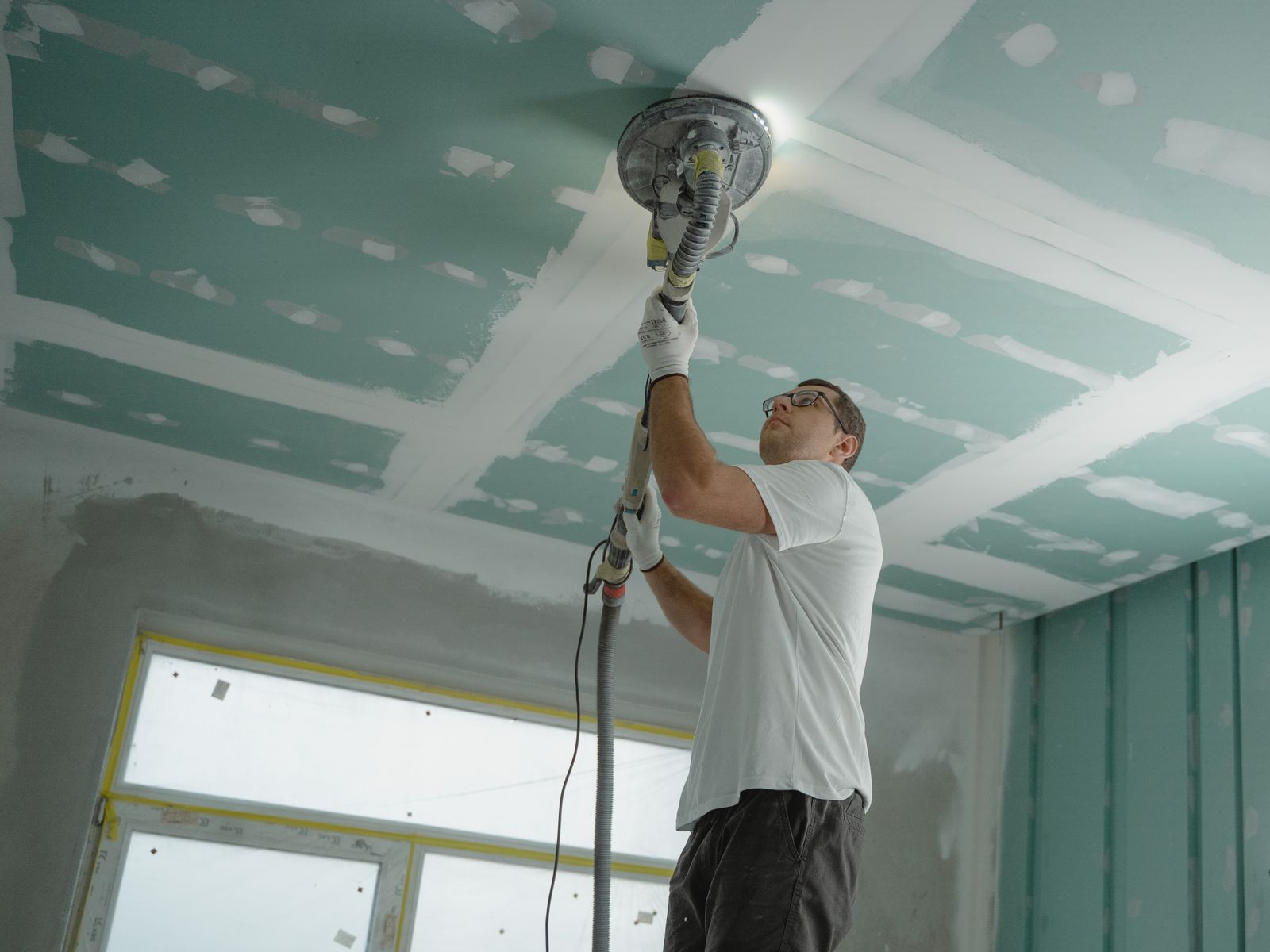
Ceiling work in Green Valley usually means working inside an occupied home in a quiet HOA neighborhood — and the process is built for that. Full plastic containment keeps dust out of living areas, projects are staged room-by-room so the home stays livable, daily cleanup is genuinely daily, and haul-away is tidy and prompt. Jobs are scheduled with realistic, communicated timelines: a typical townhome runs 2–4 days from containment to final coat of ceiling paint. Winter-resident owners often schedule the work for the summer months while they're away — an empty house and a flexible calendar make it the cheapest, easiest window of the year.
One more local note: Green Valley sits a half-hour down I-19 from central Tucson, and some contractors quietly pad quotes for the drive or decline smaller jobs altogether. Our partner professional treats Green Valley and neighboring Sahuarita — including the newer Quail Creek and Rancho Sahuarita areas, whose 2000s-era homes occasionally need ceiling repair even though they escaped the popcorn era — as core service territory, not an out-of-town exception.
Typical Green Valley Projects
Townhome full refresh
Test, scrape, knockdown or smooth retexture, and paint across a 1,200–1,600 sq ft townhome — the bread-and-butter Green Valley job, usually done in under a week.
Pre-listing package
Coordinated with your agent's timeline: lab report for the disclosure file, removal, refinish, and photo-ready paint before the sign goes up.
Water-stain and crack repair
Monsoon roof leaks and hairline settling cracks get real drywall repair and texture blending — not just a coat of white over the ring.
Cover-over for positive tests
When 1960s–70s texture tests positive, capping the ceiling with new drywall is often the most affordable safe path — modern ceilings without abatement pricing.
Green Valley FAQs
Our townhome was built in 1971. Is removal even safe?
It's safe when it's done in the right order: lab test first, then the plan follows the result. Negative texture is wet-scraped normally under containment; positive texture means honest options — leave it, cover it with new drywall, or licensed abatement — each priced in your free quote. What's not safe is anyone scraping a 1971 ceiling untested.
Do you work with HOA requirements?
Yes. Interior ceiling work rarely needs HOA approval, but parking, work hours, and debris handling are kept neighborly, and documentation is available if your association asks for contractor insurance certificates.
Can this be done while we're out of state for the summer?
Absolutely — it's one of the most popular arrangements in Green Valley. Access is coordinated with you or your local contact, progress photos keep you in the loop, and you come home in the fall to smooth ceilings and no mess.
What does a Green Valley townhome project cost?
Compact single-story townhomes are among the most affordable whole-home projects in the metro — many land in the low-to-mid thousands for scrape, retexture, and paint on negative-testing texture. See the Tucson cost guide for full ranges, then get your free exact quote.
Free Quotes in Green Valley & Sahuarita
A licensed, insured local ceiling professional, straight answers about testing, and pricing you'll understand before any work begins.