Safety first: Never scrape, sand, drill, or otherwise disturb older popcorn texture before it has been tested by an accredited lab. Asbestos fibers are dangerous when inhaled, you cannot identify them by eye, and intact, undisturbed texture is far safer than disturbed texture. When in doubt, leave it alone and test.
Why Tucson Popcorn Ceilings Are an Asbestos Question
Spray-applied acoustic ceiling texture commonly contained asbestos through the 1970s and into the 1980s. Although the federal government banned spray-applied asbestos surfacing in the 1970s, existing inventories of texture could legally be sold and installed for years afterward — which is why the practical guidance in Arizona is to treat any building material from before about 1989 as potentially asbestos-containing until a lab proves otherwise. Tucson's popcorn-ceiling housing stock — Midtown ranch homes, Casas Adobes and Foothills houses from the 60s and 70s, Green Valley's earliest retirement townhomes — sits squarely inside that window.
Two things are both true and worth holding onto at once. First: a popcorn ceiling that's intact, unpainted-over-and-peeling, and left alone is generally not an active hazard — asbestos is dangerous when its fibers become airborne and are inhaled. Second: scraping, sanding, or demolishing asbestos-containing texture without proper controls can release enormous quantities of those fibers into your home. Removal is exactly the activity that turns a dormant question into a real exposure risk, which is why testing comes before everything else.
How the Testing Process Works
Small samples are collected safely
A few thumbnail-sized samples are taken from different rooms (texture batches can vary across a house). The spots are misted with water first to suppress dust, and the sampled areas are sealed afterward. This is a minutes-long, minimally invasive step.
An accredited lab analyzes them
Samples go to a lab accredited for asbestos analysis, which examines the material under polarized light microscopy. Results typically come back in a few business days — rush service is often available for home sales on a deadline.
You get a written result
The report states whether asbestos is present and at what percentage. Keep it: a clean report is genuinely useful paper to hand a future buyer or home inspector.
The project is planned around the result
Negative: normal wet-scrape removal proceeds. Positive: the ceiling is handled under Arizona's asbestos rules — by licensed abatement, or by leaving it encapsulated and undisturbed.
Homeowners can also collect their own samples with a mail-in lab kit (typically $50–$100 including analysis) — if you go that route, wet the area first, wear a proper respirator and gloves, bag samples in sealed zip-locks, and follow the kit's instructions exactly. A professional inspection with sampling generally runs $250–$850 and is the better choice if the texture is damaged or you'd rather not touch it at all. We're happy to fold testing coordination into your free quote either way.
What Arizona (ADEQ / NESHAP) Actually Requires
Arizona doesn't have a separate state asbestos law for this — the Arizona Department of Environmental Quality (ADEQ) administers the federal NESHAP (National Emission Standards for Hazardous Air Pollutants) asbestos program. The practical outline for homeowners:
- Inspection before renovation. NESHAP expects buildings to be inspected for asbestos by an AHERA-certified inspector before renovation or demolition work that could disturb suspect material.
- Notification thresholds. When regulated asbestos-containing material exceeds threshold amounts — 160 square feet of surfacing material is the figure that matters for ceilings — an asbestos NESHAP notification must be filed with ADEQ at least 10 working days before the work begins, and the work must follow the regulation's emission-control and disposal requirements.
- Certified professionals for abatement. Abatement above thresholds is a job for trained, certified asbestos professionals with proper containment, negative air pressure, worker protection, and disposal at an approved facility — not a general handyman task.
- Owner-occupied nuance. Some NESHAP provisions apply differently to an owner-occupant working on their own single-family residence, but "differently regulated" is not "safe." The health risk to your family is identical regardless of who holds the scraper, and DIY removal of known asbestos texture is a genuinely bad idea.
This is general education, not legal or industrial-hygiene advice. ADEQ's asbestos program (azdeq.gov/asbestos) is the authoritative source for current Arizona requirements.
If the Test Comes Back Positive
A positive result is not an emergency — it's a planning fact. You have three legitimate paths:
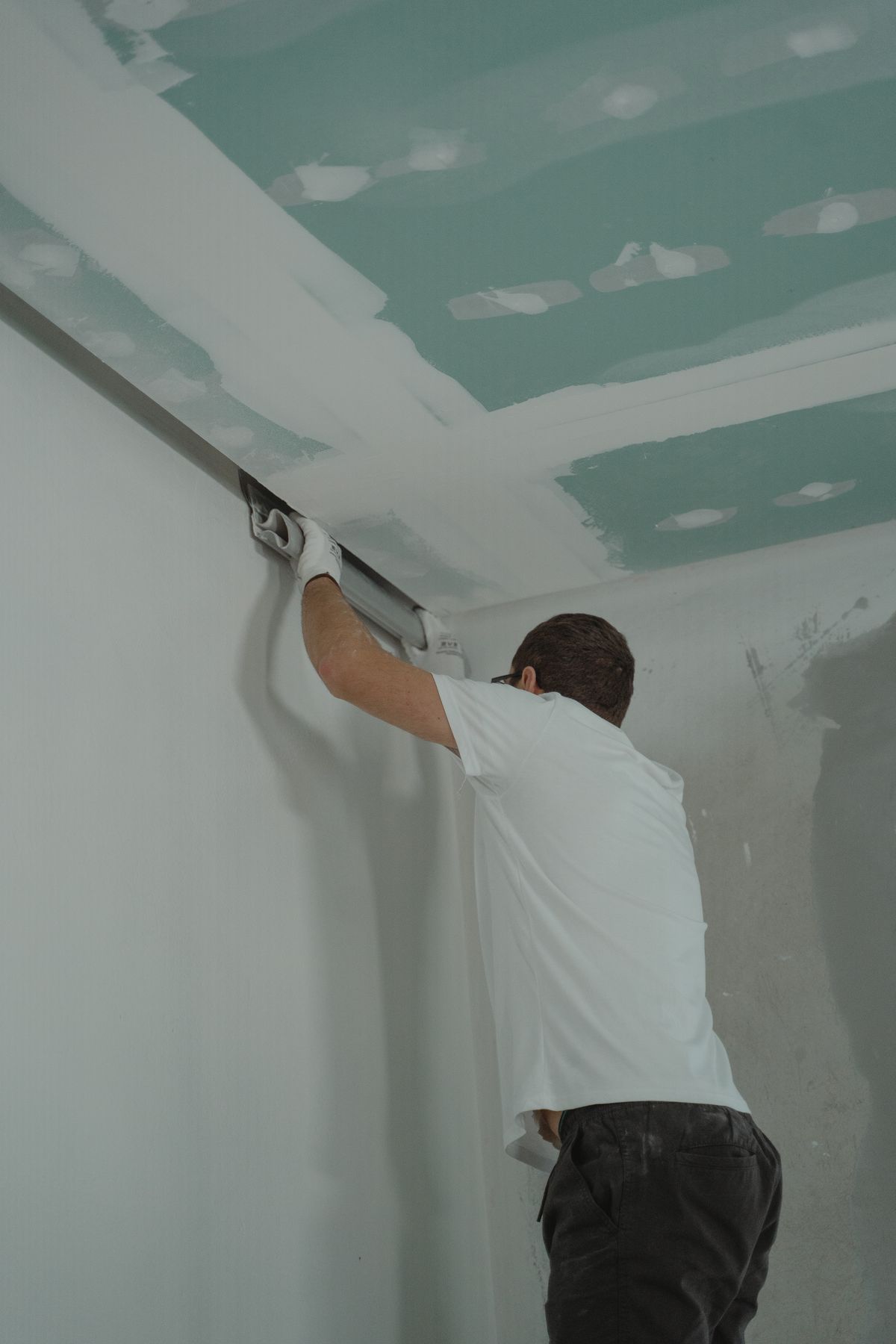
Leave it alone
Intact, undisturbed, well-adhered texture can stay right where it is. Don't sand it, don't hang plant hooks through it, and disclose it when you sell. Cost: $0 today.
Encapsulate / cover
New drywall installed over the existing ceiling, or an approved encapsulant, seals the material without disturbing it. Often the best value — you get modern smooth ceilings without abatement pricing.
Licensed abatement
Certified asbestos professionals remove the texture under full containment with negative air and proper disposal. Typically $5–$20 per square foot. The right call when remodeling will disturb the ceiling anyway.
Your free quote will lay out the realistic costs of each path for your specific house, so you can decide with numbers instead of fear. And if the test is negative — which is the more common outcome, especially for mid-80s-and-later texture — you proceed straight to normal wet-scrape removal and retexturing.
Asbestos Testing FAQs
My house was built in 1985. Do I really need to test?
Yes. Existing stocks of asbestos-containing texture were still being applied in the 1980s, which is why Arizona practice treats pre-1989 materials as suspect. The test is cheap; the wrong assumption isn't.
Can I tell if my ceiling has asbestos by looking at it?
No — and neither can any contractor, no matter how confident they sound. Asbestos fibers are microscopic. Only lab analysis of a physical sample can confirm or rule it out. Be wary of anyone willing to start scraping an older ceiling without a test report in hand.
Is a popcorn ceiling dangerous if I just leave it?
Generally, intact and undisturbed texture — even asbestos-containing texture — releases few or no fibers. Risk comes from disturbance: scraping, sanding, drilling, demolition, or ongoing crumbling and flaking. If your ceiling is deteriorating, dropping flakes, or was damaged by a roof leak, have it tested promptly rather than waiting.
Does a negative test add value when selling?
It's a nice piece of paper to attach to your disclosures, and it removes a common inspection-period negotiation lever. Sellers in older Tucson neighborhoods increasingly test proactively — sometimes as the first step toward removing the texture entirely before listing.
Who pays for the test?
The homeowner, but it's one of the cheapest line items in the whole project — usually well under $150 with DIY sampling or bundled into a professional inspection. Testing cost and logistics are spelled out in your free quote before anything else happens.
Start With the Test, Not the Scraper
Call for a free quote and honest guidance on testing your ceiling — whether your home is a 1962 Midtown ranch or a 1988 Oro Valley build.