Foothills Homes and the Popcorn Ceiling Era
The Catalina Foothills grew in distinct waves, and the ceilings tell you which wave your house belongs to. The 1950s and 60s brought the expansive burnt adobe and red brick ranch homes the Foothills is famous for — long, low rooflines, steel casement windows, and territorial-style detailing on generous lots between River Road and the mountain front. The late 1960s added the area's first townhome communities (Catalina Townhouses, built 1966–67 in mortar-washed burnt adobe, was the first), and the 1970s and 80s filled in with more townhomes, patio homes, and custom builds pushing up toward Skyline Drive and Sunrise Drive.
Nearly all of that 1960s–80s construction got sprayed acoustic ceilings somewhere — if not in the beamed living rooms, then in bedrooms, hallways, and dens. Foothills owners today are usually mid-remodel or pre-sale when they call: the kitchen has been updated, the bathrooms are done, and the popcorn overhead is the last thing making a $700K house photograph like 1979.
The Foothills also punishes dated ceilings more than most neighborhoods, simply because of light. These homes were sited for it — walls of glass facing the Santa Catalinas, clerestory windows, deep patios that bounce reflected desert sun indoors. All that beautiful raking light does popcorn texture no favors: it throws every bump into shadow, exaggerates stains, and makes rooms feel dimmer and lower than they are. The same light that exposes old texture is what makes a properly finished smooth or knockdown ceiling in a Foothills home look genuinely spectacular. And with the area's dust — this is open desert-edge living, with monsoon storms rolling straight down off the range — a cleanable, non-crumbly ceiling surface is a quality-of-life upgrade, not just a cosmetic one.
What's Different About Foothills Ceiling Work
- Vaulted and beamed ceilings. Many Foothills great rooms vault toward mountain views or carry exposed wood beams with texture sprayed between them. Scraping cleanly up to a stained beam line — without splattering it — is detail work, and it's priced and protected accordingly.
- Burnt adobe and plaster transitions. Older adobe-era homes mix drywall ceilings with plaster and masonry surfaces. A finisher who knows the difference keeps repairs appropriate to each material rather than treating everything as tract drywall.
- Age means testing. A large share of Foothills housing predates 1989, which puts it squarely in test-before-touching territory. Lab results come first on every older Foothills home — no exceptions, no matter how eager the timeline.
- Finishes that fit the architecture. Hand-troweled and knockdown finishes complement territorial and Santa Fe interiors; crisp level-5 smooth suits the modern remodels happening along the Campbell and Swan corridors. Compare finish options.
- Furnished, lived-in homes. Foothills projects are rarely empty flips. Full containment, room-by-room scheduling, and genuinely clean daily wrap-ups matter more here than anywhere else we serve.
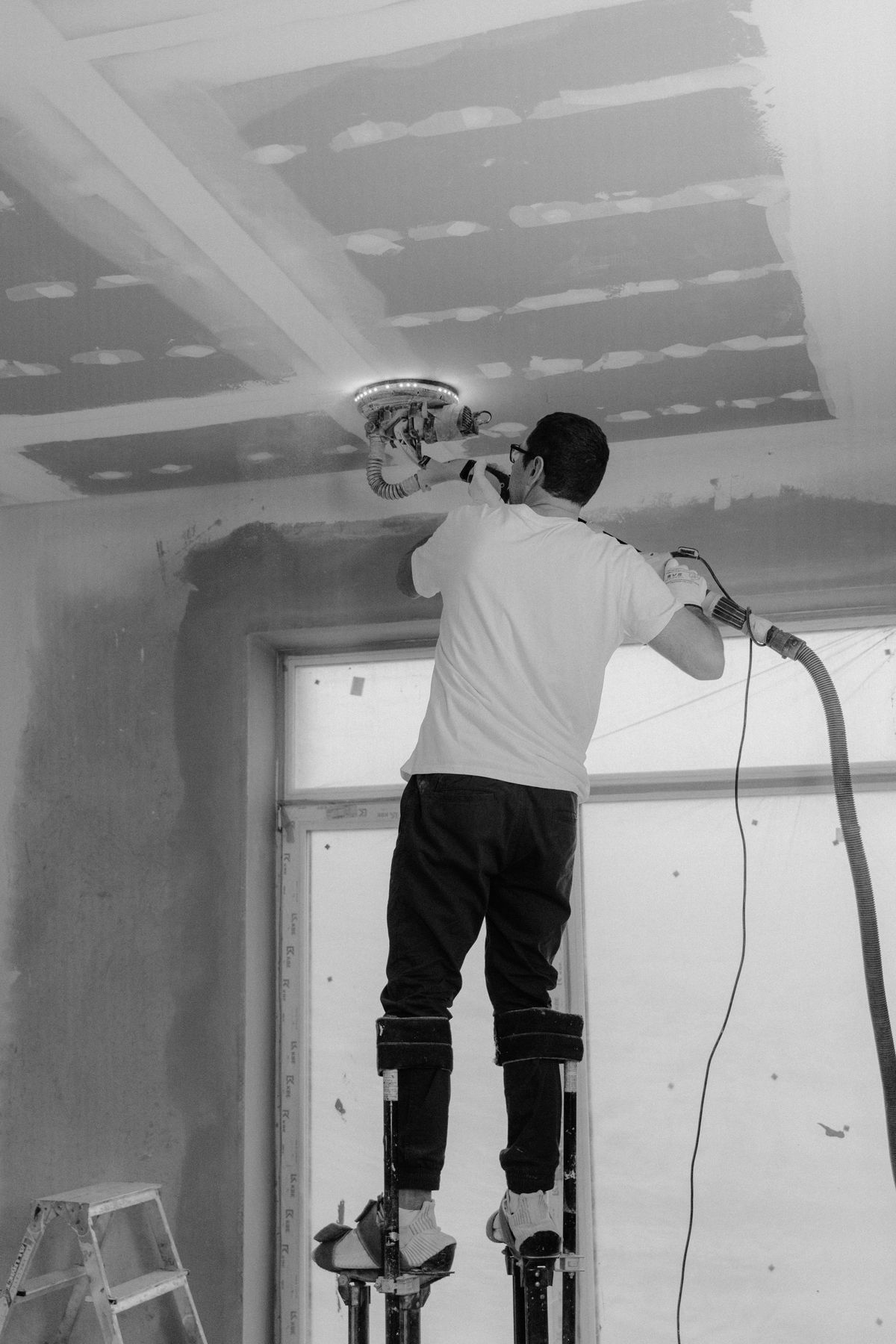
Selling a Foothills Home? Ceilings Are Cheap Leverage
Catalina Foothills listings compete in one of Tucson's most photographed price bands, and buyers touring off Skyline or near Sabino Canyon are comparing your interior against extensively updated neighbors. Popcorn ceilings read as "original condition" in photos and invite inspection-period asbestos questions. Removal plus fresh flat-white paint is among the least expensive updates that changes how every single listing photo looks. Many Foothills sellers pair it with whole-house ceiling painting in the same visit.
Common Foothills Projects
Whole-home scrape & smooth
The full transformation: test, scrape, skim, level-5 smooth or knockdown, and paint across 2,000–3,500 sq ft. Typically 4–6 working days with fast desert drying.
Townhome refresh
1960s–80s Foothills townhomes and patio homes are ideal single-visit projects — compact footprints, big visual payoff, and HOA-friendly containment and haul-away.
Water-stain repair & blend
Monsoon storms rolling off the Catalinas are hard on Foothills roofs. Stain and drywall repairs are matched into existing texture so the fix disappears.
Pre-listing package
Test documentation, popcorn removal, retexture, and paint scheduled tightly ahead of photography — with the lab report available for your disclosure file.
Timing a Foothills Project
Most Foothills jobs are scheduled in one of two windows: ahead of a spring listing, or during a larger remodel while other trades are already protecting floors and moving furniture. If a remodel is on your horizon, sequence the ceilings early — scraping and skim work is far cheaper before new flooring, cabinetry, and paint go in, and Tucson's dry air keeps the skim-coat schedule tight. Either way it starts the same: a walkthrough, a lab test if the house predates the early 1990s, and a written free quote you can hold against any other bid in town.
Catalina Foothills FAQs
Do you handle homes with very high or vaulted ceilings?
Yes. Vaults, clerestories, and two-story entries are normal Foothills work; they're quoted with the plank or scaffold access they need. Height affects price, not feasibility — see the cost guide for how.
My 1972 Foothills house has never been tested. Where do we start?
With lab samples — a quick, inexpensive first step, and on a 1972 build it's essential before anyone scrapes. If results are positive, you'll get honest options (leave, cover, or licensed abatement) with real prices for each. How testing works.
Which neighborhoods do you cover?
All of the Foothills area north of River Road — from the Campbell and Skyline corridors east past Sabino Canyon, and the townhome and estate communities in between — plus neighboring Oro Valley, Casas Adobes, and Tanque Verde to the east.
Free Quotes in the Catalina Foothills
Talk through your ceilings with a licensed, insured local pro — testing, removal, refinishing, and paint, all priced up front.